
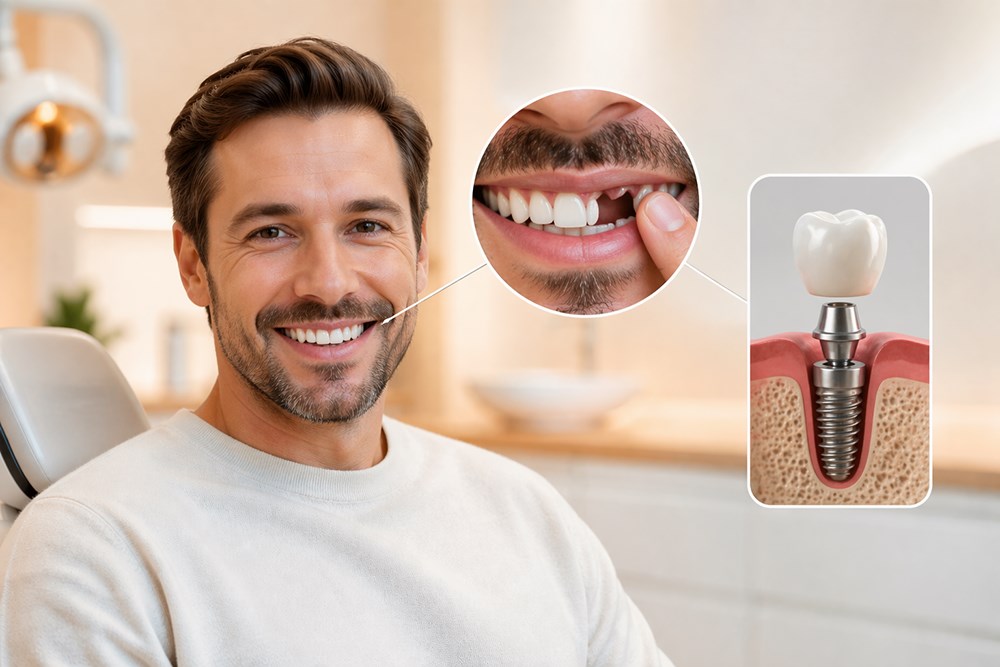
Choosing the right tooth replacement solution is a major decision that impacts your appearance, confidence, and long-term oral health. In this tooth implants vs dentures vs bridges Canada guide, we’ll break down each option clearly so you can understand what works best for you in 2026.
Understanding Your Tooth Replacement Options
When comparing tooth replacement options, Canada 2026, there are three main solutions:
- Dental Implants – permanent artificial tooth roots placed in the jaw
- Dental Bridges – fixed prosthetic teeth supported by adjacent teeth
- Dentures – removable replacements for multiple missing teeth
Each option comes with its own advantages, costs, and long-term considerations. The right choice depends on your lifestyle, budget, and dental health.
Dental Implants: The Long-Term Gold Standard
Dental implants are widely considered the most advanced and durable option in any dental implant vs bridge Canada comparison. They involve placing a titanium post into the jawbone, which acts like a natural tooth root. Over time, the implant fuses with the bone through a process called osseointegration, creating a strong and stable foundation.
Key benefits:
- Lasts 15–25+ years or even a lifetime with proper care
- Helps prevent bone loss in the jaw
- Feels and functions like natural teeth
- Does not impact the surrounding healthy teeth
Drawbacks:
- Higher upfront cost ($3,000–$6,000 per tooth in Canada)
- Requires minor surgery and healing time
- Not suitable for all patients (bone density matters)
Best for: Individuals seeking a permanent, natural-looking solution with long-term value.
Dental Bridges: A Fixed Middle Ground
Bridges are a common alternative in a dental implant vs bridge Canada comparison, especially for patients looking for a quicker and more affordable option. They use neighboring teeth as anchors to support an artificial tooth that fills the gap.
Key benefits:
- Lower upfront cost ($2,000–$4,000 range)
- Faster procedure with no surgical placement
- Fixed in place and stable
Drawbacks:
- Typically lasts 10–15 years
- Requires grinding down healthy adjacent teeth
- Does not prevent jawbone loss over time
Best for: Patients who want a fixed solution without surgery and need faster results.
Dentures: The Budget-Friendly Option
Dentures remain the most affordable choice in tooth replacement options in Canada in 2026, especially for patients missing multiple or all teeth. They are removable appliances designed to restore function and appearance.
Key benefits:
- Most affordable option ($1,000–$3,000 average)
- Non-invasive with no surgery required
- Ideal for full-mouth replacement
Drawbacks:
- Typically lasts 5–10 years
- Can feel loose or uncomfortable over time
- May affect speech and eating
- Does not prevent bone loss
Best for: Budget-conscious patients or those needing a full set of teeth replaced.
Key Comparison: Tooth Implants vs Dentures vs Bridges
When evaluating implants or dentures, which is better Canada, it’s helpful to compare the core differences:
- Longevity: Implants last the longest, followed by bridges, then dentures
- Cost: Dentures are the cheapest, and implants are the most expensive
- Comfort: Implants feel most natural, dentures least stable
- Maintenance: Dentures require removal and cleaning, and implants behave like real teeth
- Bone Health: Only implants help preserve jawbone structure
This comparison highlights why implants are often considered the best long-term solution, while bridges and dentures offer more accessible alternatives.
Which Option Is Best for You?
When deciding between implants or dentures which is better Canada, the answer depends on several factors:
- Budget → Dentures or bridges are more affordable
- Long-term value → Implants provide the best durability
- Number of missing teeth → Dentures for multiple teeth, implants for single or full-mouth options
- Health condition → Some patients may not qualify for implants due to bone loss or medical conditions
Many dental professionals recommend implants for long-term results, but bridges and dentures still play an important role depending on individual needs.
Cost vs Value: Thinking Long-Term
While implants have a higher upfront cost, they often provide better value over time due to their longevity. Dentures and bridges may need replacement or adjustment more frequently, which can add to long-term costs.
In a tooth implants vs dentures vs bridges Canada comparison, it’s important to look beyond initial pricing and consider durability, maintenance, and overall quality of life.
In 2026, dental implants are generally considered the best long-term solution due to their durability, comfort, and ability to maintain oral health. However, bridges offer a practical middle-ground option, and dentures remain the most accessible for those on a budget.
Ultimately, the best choice in this tooth implants vs dentures vs bridges Canada decision depends on your personal goals, oral health condition, and financial situation. Consulting with a qualified dentist will help you determine the most suitable option for your smile.
FAQ’s
Q1. Are tooth implants better than dentures long-term?
A: Yes, implants last significantly longer (15–25+ years or more) and provide better stability, comfort, and bone preservation compared to dentures.
Q2. What is the difference between a dental bridge and an implant?
A: A bridge uses adjacent teeth for support, while an implant is placed directly into the jawbone and acts as an artificial root.
Q3. How long do dental bridges last in Canada?
A: Dental bridges typically last between 10 and 15 years with proper care and good oral hygiene.
Q4. Can I replace dentures with tooth implants?
A: Yes, many patients switch to implants or implant-supported dentures for improved stability, comfort, and long-term results.