
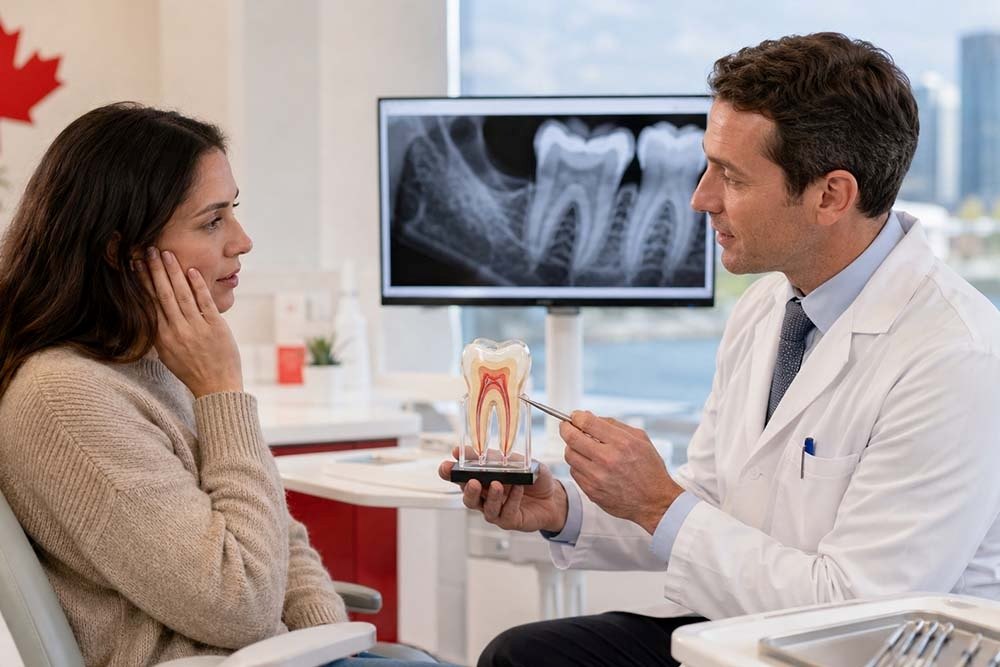
Hearing the words “root canal” often makes people nervous, but modern dentistry has transformed this common procedure into a comfortable and highly effective treatment. Advances in dental technology, improved anesthetics, and better treatment techniques mean that root canals today are far less intimidating than many people expect. Understanding what happens before, during, and after treatment can reduce anxiety and help you make informed decisions about your oral health. This guide explains root canal treatment in Canada 2026, answers common concerns about whether root canal is painful in Canada 2026, discusses root canal cost in Canada 2026, and outlines typical root canal recovery time in Canada.
What Is a Root Canal Treatment?
A root canal is a dental procedure used to save a tooth when the inner pulp becomes infected or severely damaged. Rather than removing the tooth, your dentist or endodontist carefully removes the infected tissue, cleans and disinfects the root canals, and seals the inside of the tooth to help prevent future infection.
Modern root canal treatment in Canada 2026 allows many patients to preserve their natural teeth while relieving pain caused by infection or deep decay. Saving the natural tooth often helps maintain proper chewing function and prevents neighbouring teeth from shifting.
Does a Root Canal Hurt?
One of the biggest concerns patients have is whether root canal painful in Canada 2026. Thanks to modern local anesthetics and improved dental techniques, most patients report that a root canal feels similar to receiving a routine filling.
The discomfort people associate with root canals is usually caused by the infected tooth before treatment—not the procedure itself. Once the infected pulp is removed, pressure and pain often begin to improve. Mild tenderness may occur for a few days after treatment, but it is generally manageable with medications recommended by your dentist.
Understanding that root canal pain in Canada 2026 helps reassure many patients that the procedure is designed to relieve pain rather than cause it.
What Affects the Cost?
The root canal cost in Canada in 2026 varies depending on several factors, including which tooth requires treatment, the complexity of the root canal system, the severity of the infection, your location, and whether a general dentist or an endodontic specialist performs the procedure.
Molars usually cost more to treat because they contain multiple root canals and require additional treatment time. After the root canal, many teeth also require a permanent crown to restore strength and protect against future fractures.
Patients should discuss the complete treatment plan with their dental provider to understand all expected costs before beginning root canal treatment in Canada 2026.
What to Expect During Recovery
The typical root canal recovery time in Canada is relatively short. Most patients return to work or their normal daily activities within one or two days following the procedure.
Some sensitivity when chewing or mild soreness around the treated tooth is normal during the first few days. Following your dentist’s instructions, maintaining good oral hygiene, and avoiding chewing hard foods on the treated tooth until the final restoration is completed can help promote smooth healing.
For most patients, root canal recovery time in Canada involves only temporary discomfort that gradually improves over several days.
Why Delaying Treatment Can Be Risky
Postponing treatment can allow the infection to spread deeper into the tooth and surrounding tissues. As the infection progresses, pain may become more severe, swelling can develop, and the likelihood of needing tooth extraction may increase.
Prompt root canal treatment in Canada 2026 helps preserve the natural tooth while preventing more complicated dental problems. Early intervention is generally simpler, less invasive, and often less costly than treating advanced infections.
If you experience persistent tooth pain, swelling, sensitivity to hot or cold, or discomfort while chewing, schedule a dental evaluation as soon as possible.
How to Support Long-Term Success
After treatment, maintaining good oral hygiene is essential. Brush twice daily, floss regularly, attend routine dental examinations, and have professional cleanings as recommended by your dental provider.
A properly restored tooth that receives a crown when necessary can often function successfully for many years. Regular dental visits allow your dentist to monitor the treated tooth and address any concerns early.
Discussing root canal cost Canada 2026, treatment options, and long-term care with your dentist helps you make informed decisions about protecting your oral health.
Conclusion
Modern root canal therapy is a safe, effective procedure that helps save natural teeth while relieving infection-related pain. By understanding root canal treatment Canada 2026, learning the facts about whether root canal painful Canada 2026, planning for root canal cost Canada 2026, and knowing the expected root canal recovery time Canada, patients can approach treatment with greater confidence. Seeking timely dental care offers the best opportunity to preserve your smile and avoid more extensive procedures in the future.
FAQ’s
Q1. Does a root canal hurt in 2026?
A: Modern root canal treatment is generally performed using effective local anesthesia, and most patients experience little to no pain during the procedure. Any discomfort afterward is usually mild and temporary.
Q2. How much does a root canal cost in Canada?
A: The cost varies depending on the tooth being treated, the complexity of the case, the dental provider, and whether a crown is needed afterward. Molars generally cost more than front teeth because they are more complex to treat.
Q3. How long does a root canal procedure take?
A: Most root canal procedures take approximately 60 to 90 minutes per appointment. More complex cases or teeth with multiple canals may require additional treatment time or more than one visit.
Q4. What happens if I delay a root canal treatment?
A: Delaying treatment may allow the infection to worsen, increasing pain, swelling, and the risk of abscess formation or tooth loss. Early treatment offers the best chance of saving the natural tooth and avoiding more extensive dental procedures.